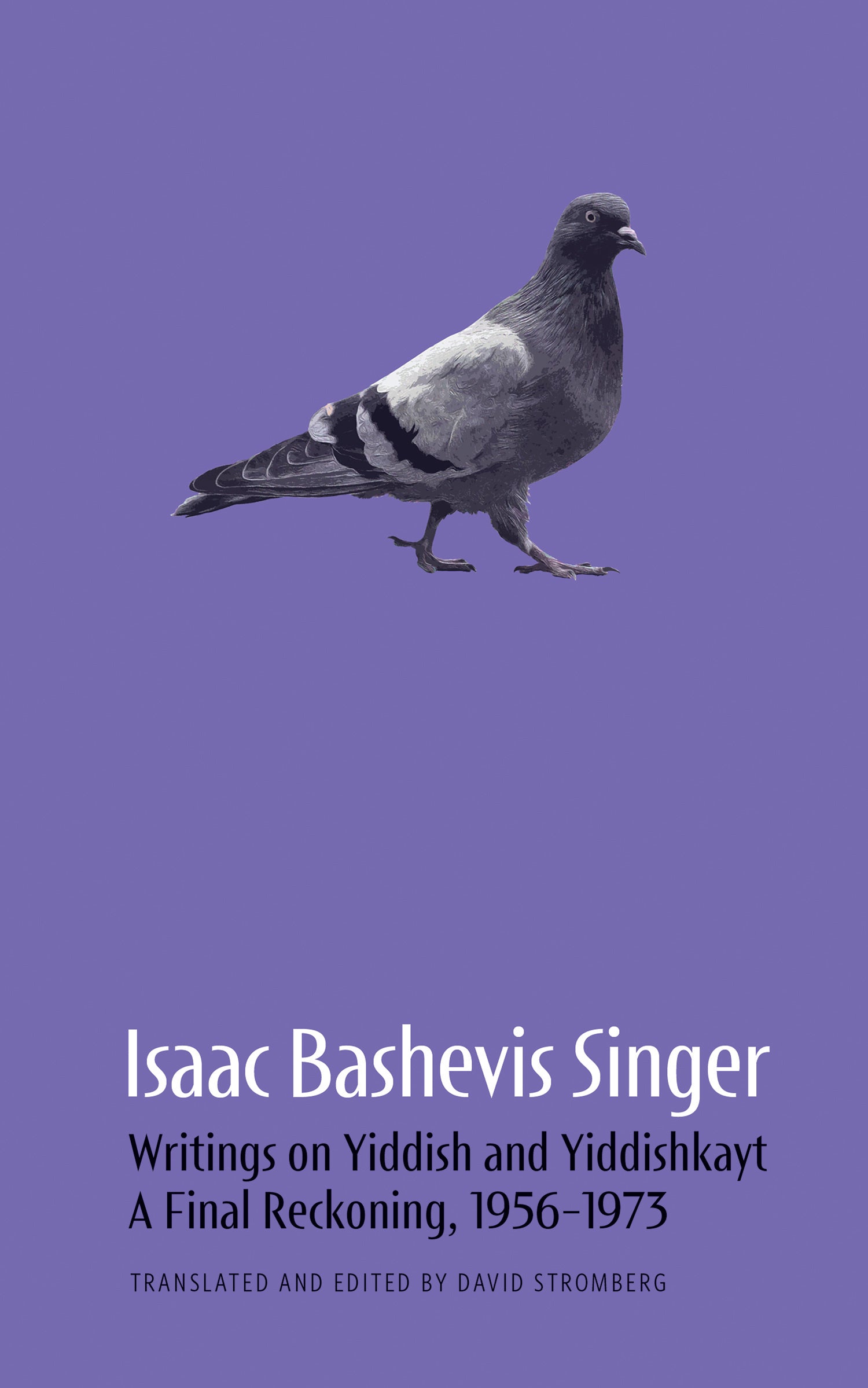
Isaac Bashevis Singer’s Writings on Yiddish and Yiddishkayt: A Final Reckoning, 1956–1973
Isaac Bashevis Singer · Translated by David Stromberg
White Goat Press (June 16, 2026)
A fiery love letter to Yiddish, alive with psychological nuance and startling insight. This final volume gathers Singer’s Writings on Yiddish and Yiddishkayt, from 1956–1973, explores the language and culture that sustained Jewish life in Eastern Europe while confronting threats to society more broadly. Singer considers the moral responsibilities of art, the difficulty of recognizing people as individuals, and the destructive pull of religious and secular extremism. David Stromberg’s translations and introductions reveal the precision, humor, and psychological depth of a writer whose social criticism remains inseparable from his understanding of human nature.
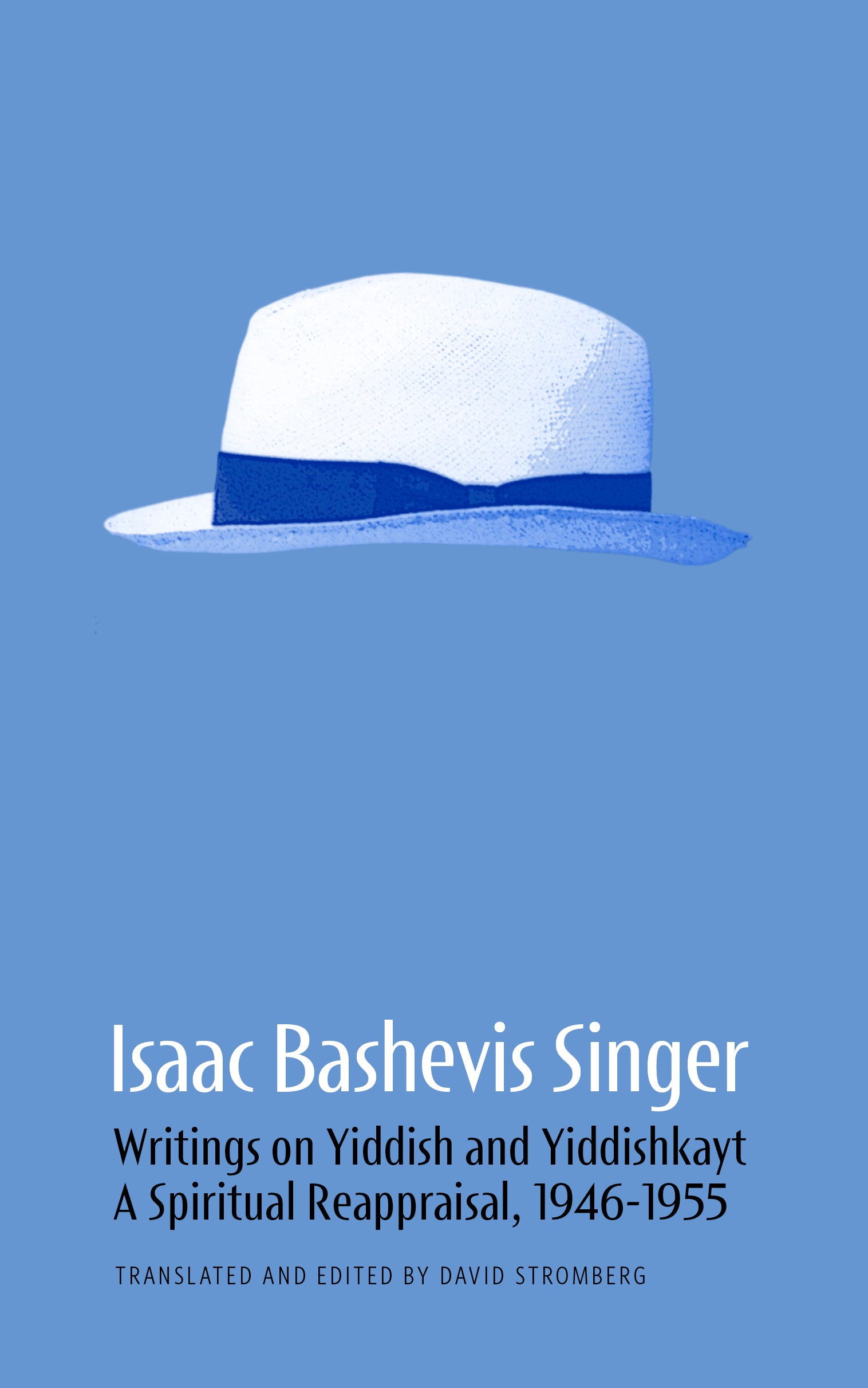
Isaac Bashevis Singer’s Writings on Yiddish and Yiddishkayt: A Spiritual Reappraisal, 1946–1955
Isaac Bashevis Singer · Translated and edited by David Stromberg
White Goat Press (March 11, 2025)
What is the meaning of being Jewish after the Holocaust? In these Writings on Yiddish and Yiddishkayt from 1946–1955, Isaac Bashevis Singer confronts the crisis of Jewish collective life and searches for ideals that might sustain it. He argues for Yiddish as a source of spiritual unity, examines both the possibilities and the limits of Zionism, and considers the power of language to shape the modern world. Translated and edited by David Stromberg, with introductions placing each piece in its historical context, the volume reveals the searching intellectual voice behind Singer’s celebrated fiction.
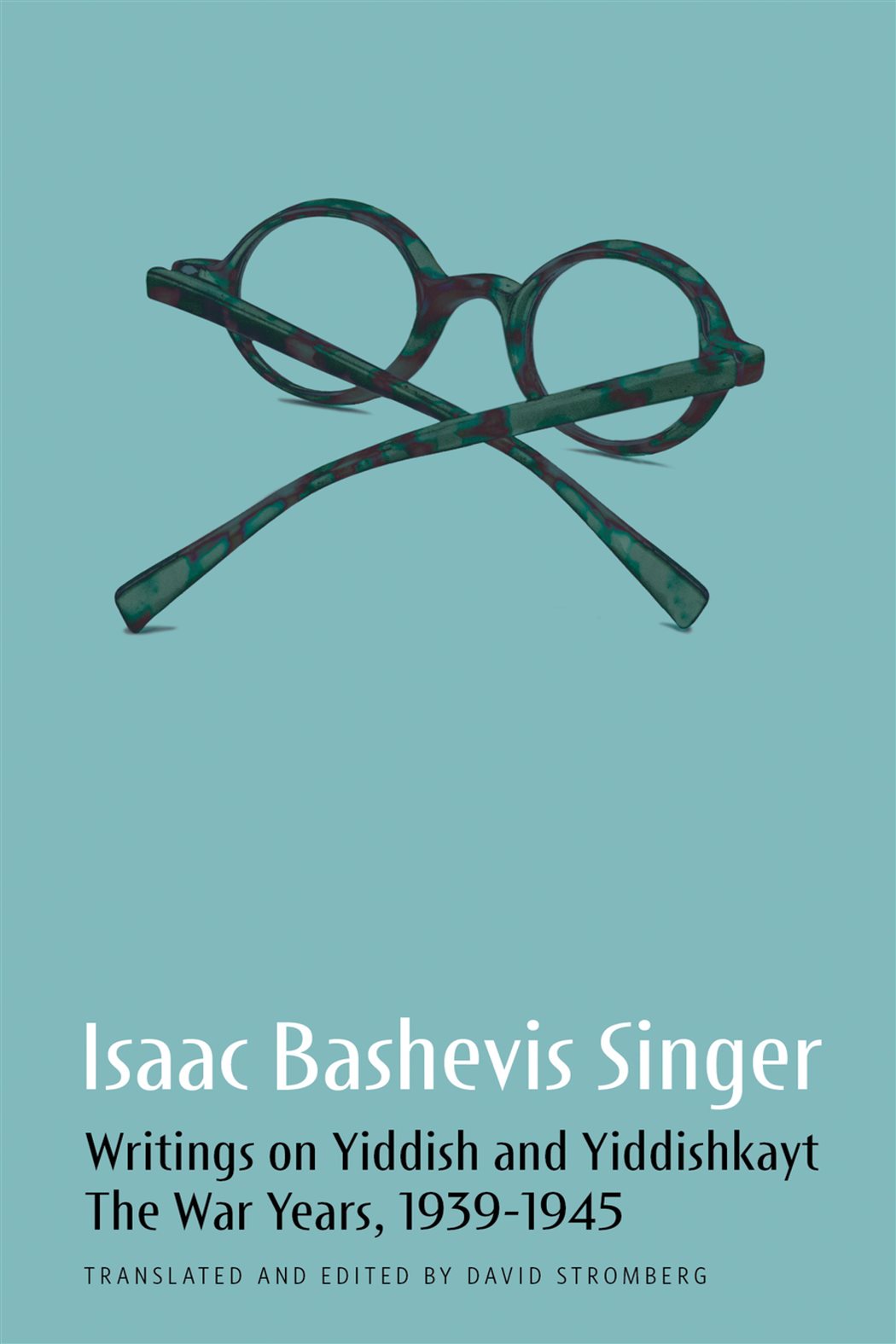
Writings on Yiddish and Yiddishkayt, Vol. 1: The War Years, 1939–1945
White Goat Press (2023)
This volume of Writings on Yiddish and Yiddishkayt, 1939-1945, is the first major effort to fill the gap between the Nobel laureate Isaac Bashevis Singer’s Yiddish and English oeuvre. David Stromberg, editor of the Singer Literary Trust, presents 25 never-before-translated essays originally published between 1939–1945, which were selected from over 150 written by Singer during WWII.
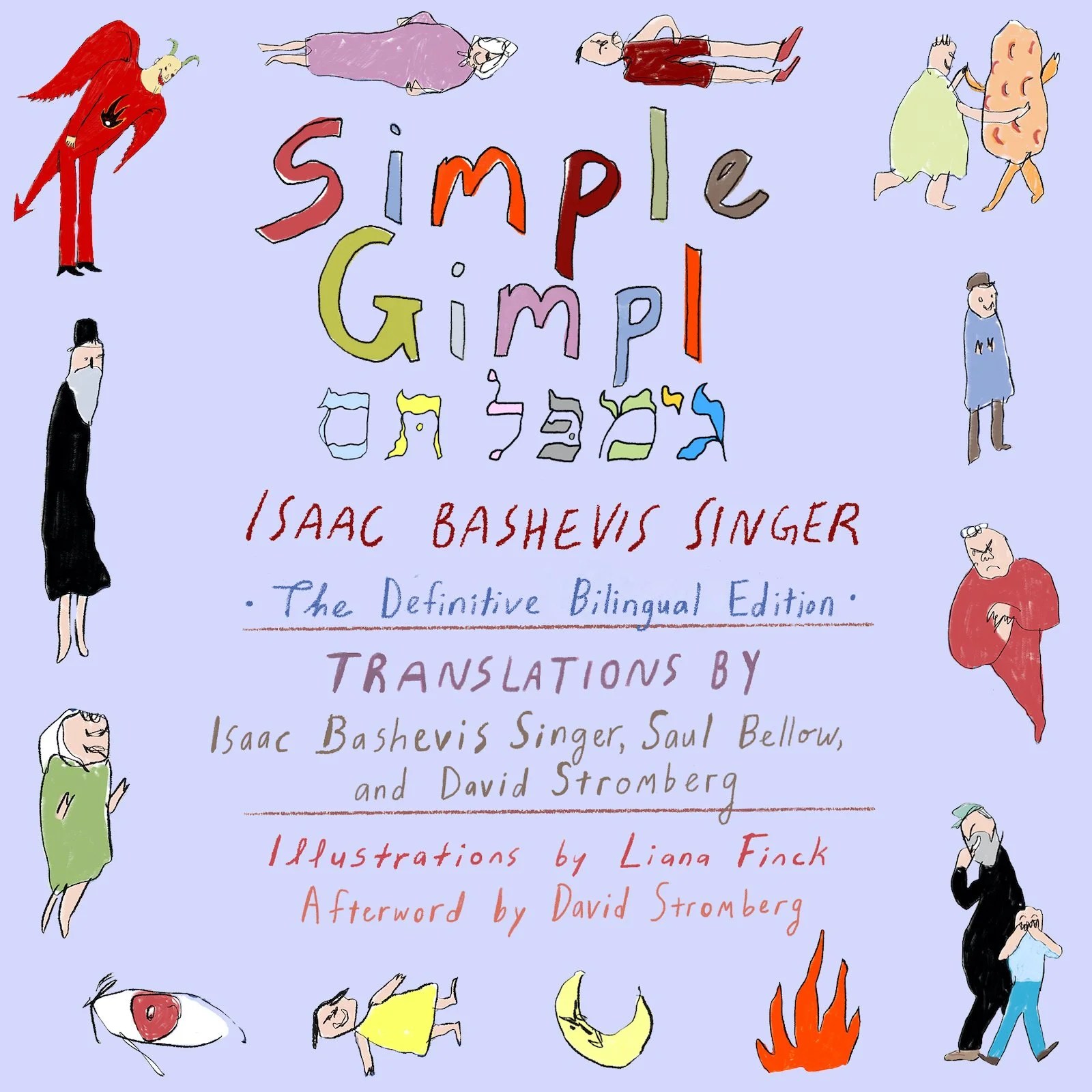
Simple Gimpl: The Definitive Bilingual Edition
Restless Books (2023)
Simple Gimpl: The Definitive Bilingual Edition. A gorgeously produced, bilingual edition of Nobel Prize laureate Isaac Bashevis Singer’s canonical story—one of the most influential of the 20th century—about a hapless yet charmingly resilient baker named Gimpl, who resists taking revenge on the town that makes him the butt of every joke. Singer’s original Yiddish appears alongside his own partial translation, now completed and edited by writer and scholar David Stromberg, and the 1953 translation by fellow Nobel laureate Saul Bellow. With illustrations by Liana Finck and an afterword by David Stromberg.
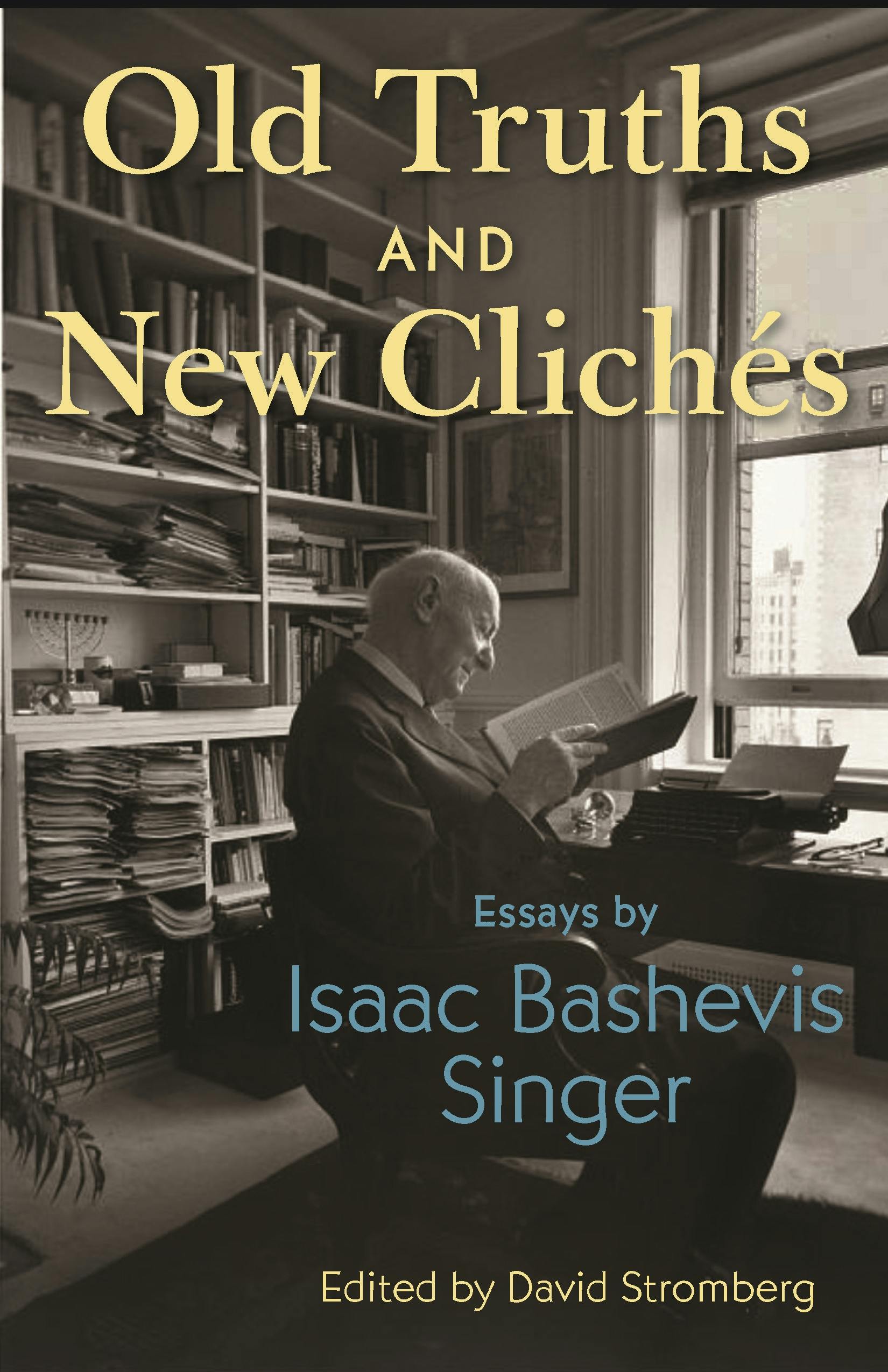
Old Truths and New Clichés
Princeton University Press (2022)
Old Truths and New Clichés collects 18 essays—most of them unpublished in English—by Isaac Bashevis Singer on topics that were central to his artistic vision throughout an astonishing and prolific literary career spanning more than six decades. Expanding on themes reflected in his best-known work—including the literary arts, Yiddish and Jewish life, and mysticism and philosophy—the book illuminates in new ways the rich intellectual, aesthetic, religious, and biographical background of Singer’s singular achievement as the first Yiddish-language author to be awarded the Nobel Prize for Literature.

A Short Inquiry into the End of the World
Working Titles, The Massachusetts Review (2021)
In A Short Inquiry into the End of the World, Mister Investigator takes on this fraught and dangerous moment in history, and what it says about our future. This particular time, a crisis that feels unique and strange, is actually connected—as Mister Investigator discovers—to multiple precedents. To this end, Stromberg’s analysis is first and foremost a reading: of the thinkers, poets, artists, philosophers, and politicians, who have in the past reacted to the unthinkable. He is most committed to those thinkers who managed to hold their despair close to home, or “not to lose it”—a phrase allegedly uttered to Anna Akhmatova by her then husband, the art historian Nikolai Punin. In Mister Investigator’s case, it is the likes of W. H. Auden, who chose to look at the fateful events of 1939 with full awareness, or the painter Mark Rothko, whose “recipe for art” includes a willing engagement with death, irony, and tension.
Idiot Love and the Elements of Intimacy
Palgrave Macmillan (2020)
Idiot Love and the Elements of Intimacy turns our search for intimacy on its head, suggesting that our way to creativity in love may be through idiocy. The book takes its readers on a journey through the work of Plato and Melanie Klein in theorizing the dynamics of intimacy while exploring some of the paradoxical aspects of love in works by Fyodor Dostoevsky and French filmmaker Catherine Breillat. Revisiting core concepts of how we think about relationships, the book lays out a model for relational breakdown—the idiot love cycle—in which we are constantly in the flux between seeing ourselves and seeing the other. Effecting close readings of literary, philosophical, and psycho-analytical sources, the book traces their shared intellectual genealogy, suggesting that the tension between Narcissus and Cassandra, with its inherent conflicts, is also a space through which love emerges from intimacy.
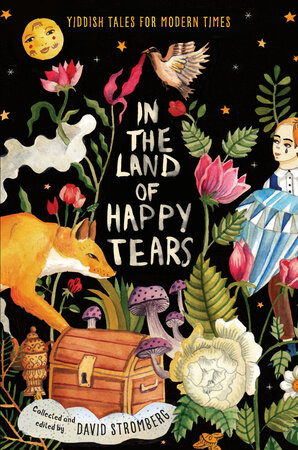
In the Land of Happy Tears
Delacorte / Random House (2018)
In the Land of Happy Tears offers access to modern works—translated for the first time into English—for anyone who appreciates a well-told story rich with timeless wisdom. You’ll meet a king who loves honey so much that instead of ruling over his people, he licks honey all day. You’ll ponder the conundrum of the moon, who longs for a playmate—but where to find a child who isn’t fast asleep at night? You’ll enter a forest in which the king of mushrooms and the queen of ants coexist autonomously but face the same threat: the little hands and trampling feet of children at play. And you’ll learn how flavoring food with salt from tears can pose a challenging dilemma. Largely overlooked or forgotten, these hidden treasures from the early twentieth century were written by some of the most respected Yiddish writers of their time—including Jacob Kreplak, Moyshe Nadir, and Rachel Shabad—and remain surprisingly resonant for a contemporary audience.
Narrative Faith: Dostoevsky, Camus, and Singer
University of Delaware Press / Rowman & Littlefield (2018)
Narrative Faith engages with the dynamics of doubt and faith to consider how literary works with complex structures explore different moral visions. The study considers a literary petite histoire in which faith is problematized in two ways—in the themes presented in the story, and the strategies used to tell that story—leading readers to doubt the narrators. Setting off with Dostoevsky’s Demons (1872), a novel that has captivated and confounded critics and readers for well over a century, the study examines Albert Camus’s The Plague (1947) and Isaac Bashevis Singer’s The Penitent (1973/83), works by twentieth-century authors who intensify questions of faith through narrators that generate doubt, and extend these questions into the current era. The book’s last section looks beyond narrative inquiry to consider themes of confession and revision that appear in all three novels and open onto horizons beyond faith and doubt—to hope.
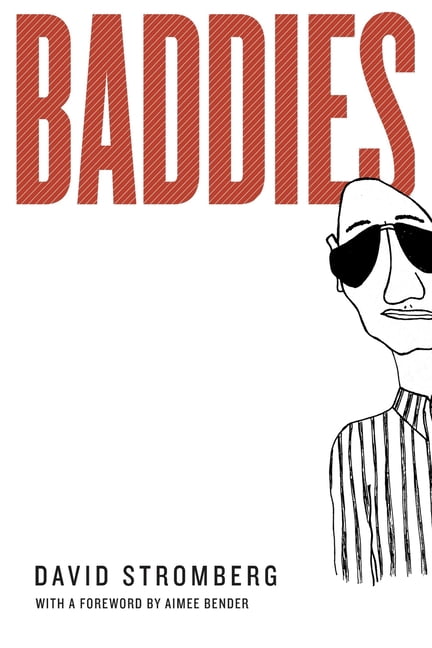
Baddies
Melville House Publishing (2009) / Modern Times Publishing (2021)
Baddies looks aslant at everyday life, unearthing its most hilarious and ridiculous aspects amidst even our darkest fears and phobias. Cult cartoonist David Stromberg has been dubbed “Thurber on speed” at the legendary Gotham Book Mart. It’s easy to see why in the weird world of Baddies, an absurdist graphic collection of gags, ideas, and late night thoughts that harkens back to the early days of New Yorker cartoonists . . . even as it seems so edgy as to be completely new. Inhabited by an antic and eclectic assortment of odd-ball characters, these captioned cartoons capture a world forever veering off from the normal, the rational, and the “well adjusted.” And they introduce us to a startlingly original artist, where the art and the writerly wit combine in a way that’s both disarmingly funny and strangely familiar, not to mention refreshingly, bitingly smart.
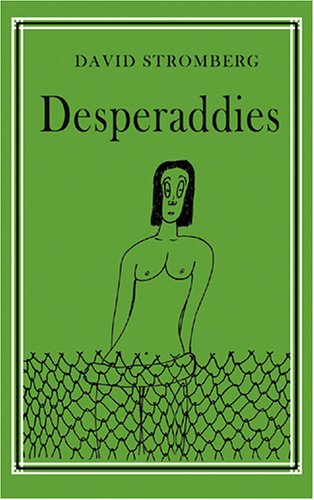
Desperaddies
Jovian Books (2003)
Desperaddies is the third collection in a trilogy of graphic works inhabited by an eclectic assortment of characters caught in various moments of confusion, awkwardness and oblivious outrageousness. The book moves through eight thematic chapters, such asIndividuals in Despair, A Review of More Childish Times and Animal Relief. Inspired by the work of James Thurber, these captioned cartoons succinctly capture a world forever out of sync with the normal, the rational and the so-called well-adjusted.
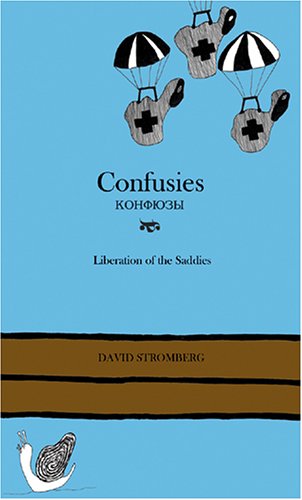
Confusies
Jovian Books (2002)
Confusies is the second collection in a trilogy of graphic works inhabited by an eclectic assortment of characters caught in various moments of confusion, awkwardness and oblivious outrageousness. The book moves through six poetically titled sections designating notions such as “…despite the confusion…”, “…beat down…”, ” and “…the dependence keeps…” Inspired by the work of James Thurber, these captioned cartoons succinctly capture a world forever out of sync with the normal, the rational and the so-called well adjusted.
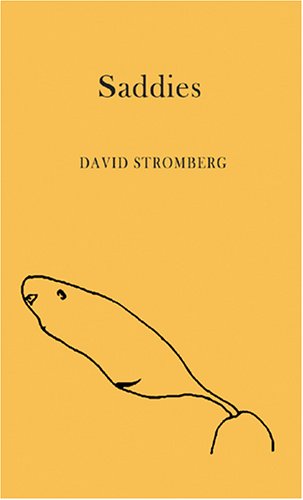
Saddies
Jovian Books (2000)
Saddies is the first collection in a trilogy of graphic works inhabited by an eclectic assortment of characters caught in various moments of confusion, awkwardness and oblivious outrageousness. The book moves through three parts of the subtitle—”You Never Know Who Might Give You a Black Eye”—suggesting the unpredictability of the cartoons’ internal universe. Inspired by the work of James Thurber, these captioned cartoons succinctly capture a world forever out of sync with the normal, the rational and the so-called well adjusted.

